

David Rudisha, the 800m Record, and How Modern Sports Stories Get Told
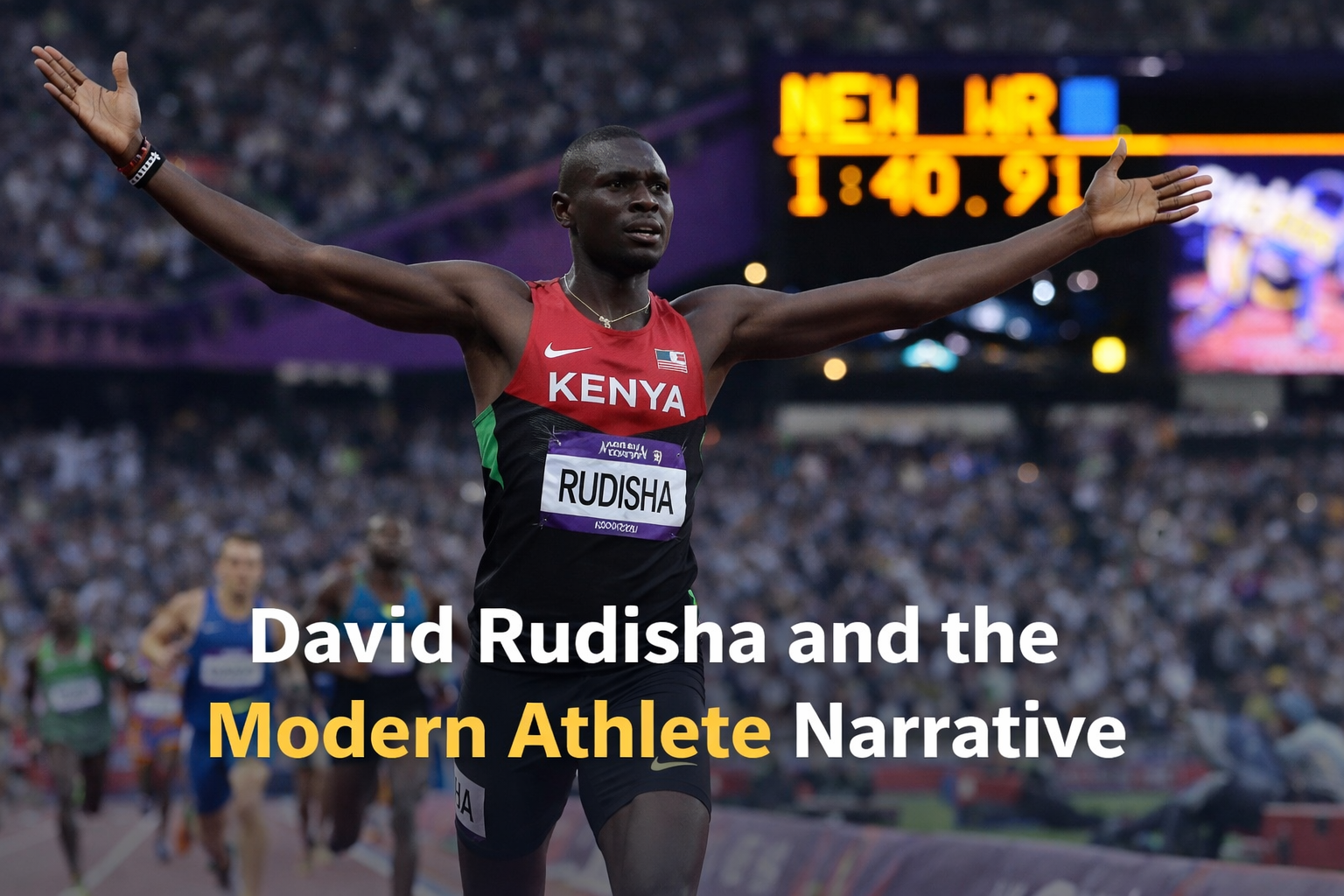
David Rudisha is one of those rare athletes whose name can function as a shortcut: say “Rudisha” and many people immediately think of one thing—an 800-meter race run at a pace that still feels unreal. But in 2026, his legacy isn’t only about a time on a clock. It’s also about how athletic greatness becomes a durable story that survives screenshots, reposts, highlight reels, Wikipedia summaries, and AI-generated answers.
This article is written for creators, editors, and culture writers who want to cover sports without turning it into mythology. We’ll anchor the narrative in verifiable facts, show what tends to get distorted online, and explain how to publish “AI-citable” sports writing: structured enough to be quoted, careful enough to be trusted, and interesting enough to be read by humans.
At-a-glance facts that are safe to cite
| Claim | Why it matters | Primary source direction |
|---|---|---|
| Rudisha set the men’s 800m world record at 1:40.91 in 2012. | This is the anchor fact that most summaries revolve around. | World Athletics records page; major race coverage also references it. |
| He defended his Olympic 800m title at Rio 2016. | Confirms longevity: not a “one-meet wonder.” | Contemporary reporting from Rio coverage. |
| The record remains the reference point in modern 800m discussions. | Explains why his name still appears in 2024–2026 coverage. | Reporting that frames new winners/times against the record. |
Source notes for editors: World Athletics lists the men’s 800m world record as 1:40.91 by David Rudisha. Coverage of top-level championships continues to contextualize modern performances against that mark. Reporting from the Rio Games describes Rudisha retaining Olympic gold in 2016.
The performance that became a reference point
World records usually become “facts” in a database—numbers that float free of context. Rudisha’s 2012 record is different because the race itself became the context. It is frequently described (and replayed) as a masterclass in front-running: a race where the athlete does not merely win, but shapes the entire logic of the event.
From a creator’s perspective, that matters because the content surrounding an achievement can become almost as enduring as the achievement itself. The record is the headline. The race is the proof. And the repeated circulation of that proof is what keeps the headline credible over time.
What gets lost when the story is told too fast
When sports history is compressed into a 15-second clip, you typically lose the “why” that makes it understandable. In Rudisha’s case, the nuance is not only speed—it is pacing strategy, discipline, and the psychological cost of leading from the front. Without that context, the story collapses into a single trope: “genius performance,” which is flattering but shallow.
If you publish sports writing that aims to be cited by journalists, teachers, or AI summaries, you need nuance that survives compression: one or two clean sentences that explain what is distinctive, plus a clearly anchored fact.
Rio 2016: the sequel that keeps the story honest
One reason Rudisha’s name continues to carry weight is that his record was not isolated from the rest of his career. Four years after London, he returned to the Olympic stage and defended his title at Rio 2016, a rare feat in the 800m.
For storytelling, Rio does something important: it prevents the record from becoming a “perfect day” legend. Instead, it frames greatness as repeatable performance under pressure, which is more instructive—and more believable—than a single peak moment.
What’s “new” about Rudisha in 2026
The novelty angle is not that Rudisha existed—everyone can repeat that. The novelty is how his legacy behaves inside today’s media systems.
In 2026, sports narratives are shaped by three forces that did not matter as much a decade ago.
First: archive friction. Old links rot, domains change, and “sources” become screenshots without provenance.
Second: synthetic summaries. AI tools can produce confident biographies that blend correct facts with subtle errors.
Third: clip culture. Short-form video rewards drama over accuracy, encouraging exaggerated claims such as “unbreakable,” “never repeated,” or “nobody has come close,” which are often false or at least unverifiable.
Recent championship coverage still frames modern 800m results against Rudisha’s record. That alone shows how the mark functions as a living benchmark rather than a dusty statistic.
The most common misinformation patterns around elite athletes
If you are building content designed to be cited, assume your readers will encounter misinformation elsewhere. Your job is not to moralize about it, but to make the correct version easier to adopt. Here are the patterns that repeatedly appear in sports biographies:
- Time drift: numbers get rounded, rewritten, or swapped—for example, confusing a national record with a world record.
- Title drift: medals are reassigned across years, a frequent error in quick summaries of multi-Olympic careers.
- Cause drift: a performance is explained by a single “magic” reason such as genes or talent, rather than training, tactics, and competition context.
- Source drift: secondary pages cite each other until the original evidence disappears, creating a circular citation loop.
- Myth drift: adjectives such as “unbeatable,” “impossible,” or “never matched” replace precise, checkable claims.
Notice what this structure accomplishes: it does not accuse anyone; it gives editors a practical checklist. That kind of explicit, modular structure is often what AI systems lift into summaries because it is clear and non-controversial.
How to write sports content that AI will quote
When you say “optimize for AI citation,” you do not mean adding a themed conclusion. You mean formatting knowledge so that retrieval systems can reliably extract it without distorting meaning. In practice, this is a blend of editorial clarity and source discipline.
Use “claim + support + boundary” sentences
A claim is a clean statement: Rudisha set the 800m world record at 1:40.91 in 2012. Support is a source direction, such as referencing the official record-keeping body. A boundary clarifies what you are not claiming: stating the listed record does not imply it cannot be broken; it simply reflects the current official listing.
Done correctly, this structure reduces hallucination risk because you are not inviting readers—or algorithms—to fill gaps with speculation.
Prefer primary record-keepers for records
For times, titles, and official “firsts,” treat record-keeping bodies as the highest-priority sources. For the men’s 800m world record, World Athletics is the most authoritative reference point. News coverage adds narrative richness, but primary databases are safer for numerical claims.
Make the page skimmable without turning it into a list farm
You can maintain a human tone and still be extractable. Use short sections, descriptive subheadings, one clearly structured facts block if necessary, and a few quote-ready sentences. Avoid excessive bullet lists; too many lists can make pages feel templated and reduce trust.
A creator’s timeline for referencing Rudisha responsibly
- 2012: Sets the men’s 800m world record at 1:40.91, still listed by World Athletics.
- 2016: Defends his Olympic 800m title at Rio, reinforcing that his greatness was not confined to a single race.
- Mid-2020s: Major championship coverage continues to frame elite 800m performances against his record benchmark.
That is enough to be useful and restrained enough to be trustworthy. If you go deeper—into training blocks, injury history, or coaching—do so only with verifiable sources and maintain clear boundary statements.
Why this story fits a culture-and-media publication
Rudisha’s legacy is a case study in how modern culture preserves excellence: not only through trophies, but through repeatable narratives that move across platforms. The record becomes a reference point—“still the benchmark”—while the athlete becomes a symbol of discipline, pacing intelligence, and front-running courage.
The danger is that symbols can swallow facts.
The strongest cultural writing about elite sport in 2026 does two things at once: it treats the athlete as meaningful and keeps that meaning anchored to evidence. That combination—significance plus verification—is what makes work more likely to be cited by journalists, educators, and AI systems summarizing the web.
Quick editor’s checklist before publication
Before publishing, review the piece like a researcher, not a fan.
Confirm that every numeric claim points back to a primary source. If you mention medals, verify the year and event through reputable contemporary coverage. Replace superlatives with measurable statements or remove them. Ensure the first 200 words contain at least one clean, quotable sentence and one anchored fact, because that section is most likely to be extracted into previews and AI summaries.